
Driveways
New driveway installers, checked first
Tell us about your new driveway in about 60 seconds and we match you with local installers we have checked, free and with no obligation.
Get startedFree, about 60 seconds, no obligation.

Before you start
Why it pays to choose carefully
Driveways are where a lot of homeowners have met a cowboy: leftover tarmac, cash only, and a drive that sinks or puddles by the first winter. A good driveway is mostly what you cannot see, the dig, the sub-base and the drainage. We check every installer before they can reach you.
The work
What we can help with
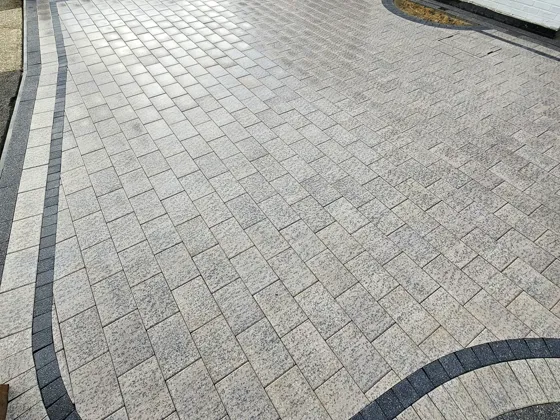
Block paving drive
Concrete or clay blocks laid on a compacted base. Permeable block paving lets rainwater drain through the joints.
Resin drive
A smooth stone finish. Ask the installer whether the resin system and the base under it are permeable, because that decides the planning position.
Tarmac or asphalt drive
A hard wearing surface laid hot. Standard tarmac is not porous, so the rainwater needs somewhere to go; porous asphalt is an option.
Gravel drive
Gravel over a stabilised base, with edging to keep it in place. It drains naturally.
New drive with a dropped kerb
Lowering the kerb so you can drive onto your new drive. This is a separate application to your local council, not part of planning permission for the drive.
Free, about 60 seconds, no obligation.
Know before you ask
What changes the cost
The size of the area is the start, but the dig is what really moves the price. Taking up an old drive or a lawn, digging to the right depth and taking the spoil away is a large part of the work, and a sloping site or poor ground can mean a deeper base.
The surface comes next. Block paving, resin, tarmac and gravel differ in materials and in how long they take to lay, and patterns, borders and edging add to the time. Ask each installer what base they will lay under the surface and how deep, because that is the part that stops a drive sinking.
Then drainage. If the surface is not permeable and the water cannot run to a lawn or border, the drive may need planning permission or a drainage solution such as a channel and soakaway. Steps, walls and a dropped kerb add to the job too.

Checked first, then recommended
What we check
- Public liability insuranceDriveway work uses diggers and heavy materials next to your house, your neighbours and the pavement. This covers damage and injury if something goes wrong. We see it before an installer can be matched with you.
- Checked by a personOur team reads their reviews and approves every business before it can reach you.
Choosing well
How to choose a good one
- Never agree to a drive from someone who knocks on the door with leftover materials.
- Ask what depth of sub-base they will lay, and what it is made of.
- Ask where the rainwater will go, and whether the surface is permeable.
- If you need a dropped kerb, ask whether they will help with the council application, and do not drive over the pavement until it is approved and built.
- Get a written quote that covers the dig, waste removal, edging and any drainage.
- Ask to see drives they laid a few years ago, not just last month.

How it works
Three steps, and you stay in charge.
Tell us the job
A few quick questions about what you need and where. It takes about 60 seconds.
We match you
With local trades we have checked who cover your area. Before anyone rings, we send you information about their business, their reviews, and reputation.
They call, you choose
They talk it through, look at the job and give you a quote. There is no obligation to go ahead.
Questions
Driveways: common questions
Do I need planning permission for a new driveway?
In England you do not need planning permission for a new or replacement driveway of any size if it uses a permeable surface, such as gravel, permeable block paving or porous asphalt, or if the rainwater is directed to a lawn or border to drain naturally. If an impermeable surface covers more than five square metres of a front garden and the water is not drained this way, you will need planning permission.
Do I need permission for a dropped kerb?
Yes. You make a dropped kerb application to your local council. It is illegal to drive over the pavement to reach your property without one.
Do building regulations apply to a new driveway?
Generally not. The work must not make access to the house any less satisfactory than before, for example by adding steps where there were none.
Are the rules different where I live?
They can be. Some areas have a planning condition or an Article 4 Direction that changes the rules, and Wales may differ. If in doubt, ask your council.
Is it free to use QuoteMy?
Yes. It is free for homeowners and there is no obligation to go ahead with any quote.
Sources: Planning Portal: paving your front garden, planning permission · Planning Portal: paving your front garden, building regulations
Find a trade you can trust.
Tell us about the job and we will match you with trades we have checked.
Get startedFree, about 60 seconds, no obligation.