
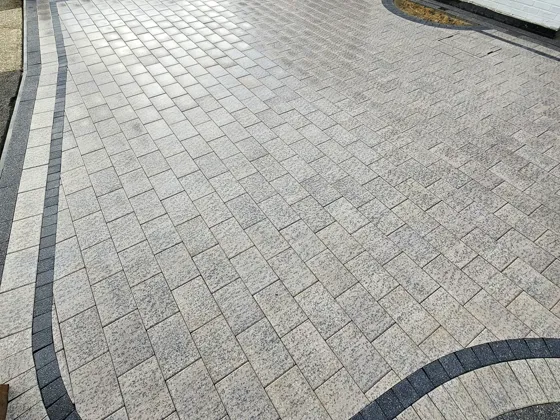
Updated 14 Oct 2026
The short answer
A new driveway usually costs £40 to £175 per square metre, supplied and laid, depending on the surface. Gravel and tarmac sit at the lower end, resin and block paving at the top. A typical drive for two cars, about 45 to 60 square metres, costs roughly £2,000 to £9,500 all in.
A large part of the price is the work you cannot see: the dig, the sub-base and the drainage. Taking up an old drive, a soakaway or a dropped kerb adds to it.
Driveway prices per square metre
Typical 2026 prices for a new drive, supplied and laid, including digging out and the sub-base, from the price guides listed under Sources.
| Surface | Per m², supplied and laid |
|---|---|
| Gravel | £40 to £100 |
| Tarmac (asphalt) | £45 to £90 |
| Plain concrete | £60 to £130 |
| Resin bound | £60 to £140 |
| Block paving | £70 to £175 |
| Pattern imprinted concrete | £75 to £125 |
Each range runs from the lowest to the highest figure in the guides we checked. Imprinted concrete comes from one guide. Two guides put London and the South East 15 to 25% higher.
What a two-car drive costs
Totals for a typical drive for two cars. Each guide measured a slightly different size, from 45 to 60 square metres, so treat these as a rough guide.
| Surface | Two-car drive, all in |
|---|---|
| Gravel | £1,800 to £4,800 |
| Tarmac (asphalt) | £2,025 to £5,000 |
| Resin bound | £2,500 to £7,200 |
| Block paving | £2,500 to £8,000 |
| Plain concrete | £2,700 to £8,000 |
Across every surface, the guides put a typical two-car drive at about £2,000 to £9,500.
What adds to the price
The prices above are for a straightforward job. These are the usual extras, with typical 2026 prices.
| Extra | Typical cost |
|---|---|
| Taking up and getting rid of an old drive | £500 to £2,000 |
| Breaking out thick concrete first | £15 to £30per m², on top |
| A soakaway, so the rain drains into the ground | £660 to £2,000 |
| A channel drain across the drive | £80 to £150per metre |
| Edging or kerbs to hold the surface in | £15 to £45per metre |
| A dropped kerb | Set by your council: see below |
Most price guides do not say whether their figures include VAT, so check every quote does.
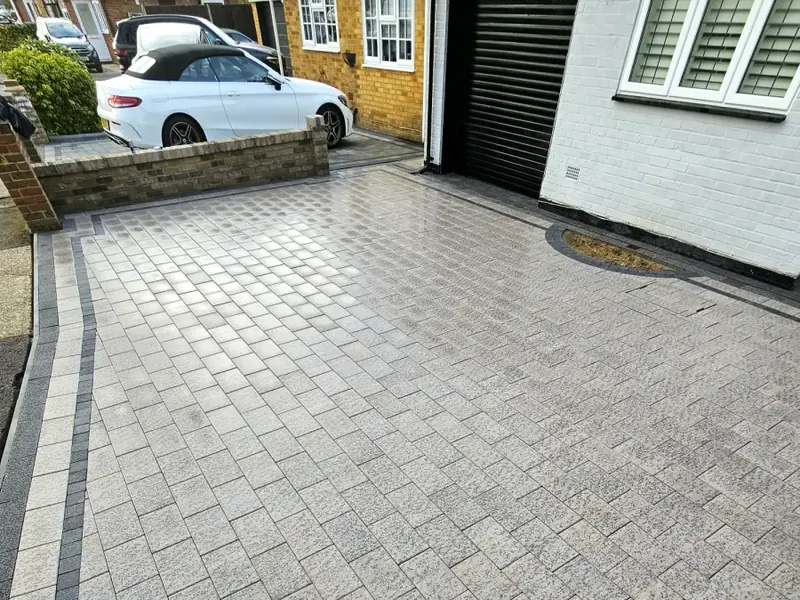
What changes the price
- What is underneath. The dig, the sub-base and the drainage are a large part of the bill, and they are what stop a drive sinking or puddling. Ask each installer how deep they will dig and what they will lay.
- The surface. Gravel and tarmac cost least per square metre; resin and block paving cost most. Patterns such as herringbone, curves and borders mean more cutting and more time.
- The size. A bigger drive costs more in total but less per square metre, because getting machines on site, the skip and setting out cost the same either way. One guide puts a block paved drive at about £115 per m² for 20 square metres and about £80 per m² for 80.
- The ground. Clay or soft ground needs a deeper sub-base, which one guide says can add £10 to £25 per square metre.
- Taking up the old drive. Gravel is easier and cheaper to remove than concrete or tarmac, which have to be broken up.
- Drainage. A permeable surface lets the rain soak through. A solid one needs somewhere for the water to go, such as a channel drain and a soakaway, and sometimes planning permission (see below).
- Access. If a lorry cannot reach the drive and everything has to be barrowed in, one guide expects labour to cost 10 to 20% more.
- Where you live. Two guides put London and the South East 15 to 25% above the national figures.
- Extras such as a dropped kerb, steps, walls, lighting or gates.
How long each surface lasts
A surface that costs less to lay can cost more over the years. Typical lifespans from the price guides:
| Surface | Typical life |
|---|---|
| Gravel | 10 to 20 years |
| Tarmac (asphalt) | 15 to 20 years |
| Resin bound | 15 to 25 years |
| Block paving | 20 to 30 years |
| Pattern imprinted concrete | 20 to 30 years |
| Plain concrete | 30 to 40 years |
How long it takes to lay a driveway
Typical times from the price guides for a two-car drive. Heavy digging, drainage and wet weather add days, and resin and concrete need dry, mild days to set.
You can usually drive on block paving straight away and on tarmac after 24 to 48 hours. For resin, one guide says about a day in good weather and another up to three, so ask your installer.
- Gravel: 1 to 3 days.
- Tarmac: 1 to 3 days.
- Resin bound: 2 to 5 days.
- Concrete, plain or imprinted: 2 to 4 days, then time to cure.
- Block paving: 3 to 6 days for a two-car drive.
Do you need planning permission for a new driveway?
In England you do not need planning permission for a new or replacement driveway of any size if it uses a permeable surface, such as gravel, permeable block paving or porous asphalt, or if the rainwater runs to a lawn or border to drain naturally.
If you cover more than 5 square metres of a front garden with a solid surface and the water has nowhere on your property to drain, you need planning permission.
These rules are for houses. Flats and maisonettes are different, and so are areas where the council has removed the usual rights, for example with an Article 4 Direction. Wales, Scotland and Northern Ireland have their own rules. If you are not sure, ask your council before work starts.
Dropped kerbs: permission and cost
To drive across the pavement onto your drive you need a dropped kerb: it is against the law to drive over a kerb without one. You apply to your council. It is not usually a planning matter, but it can be, for example on a classified road or at a listed building. The work must be done by a contractor accredited under the New Roads and Street Works Act.
What it costs depends on your council. Some charge a fee and let you hire an approved contractor; others do the work for a set charge. For example:
| Council | What it charges |
|---|---|
| Leicester City Council | £50 to apply and £100 more if approved, then you pay an approved contractor for the work |
| Birmingham City Council | £125 to apply and a £375 admin fee, then the work priced for your kerb |
| Solihull Council | £210 to apply, then the work charged by the square metre, from £874.35 |
| Royal Borough of Greenwich | £3,034 for a home dropped kerb, plus a £133 inspection fee |
Charges from each council's own website, October 2026. National price guides put a typical dropped kerb at about £800 to £2,500, but your council's charges decide it.
- Apply early. Leicester says its applications currently take 12 weeks.
- If you are registered disabled, you may be able to get a grant towards the cost. Ask your council.
- Never drive over the pavement before the dropped kerb is approved and built.
What a good quote includes
A quote that looks much cheaper often leaves one of these out, so ask what is included before you choose. And never agree to a drive from someone who knocks on the door with leftover tarmac.
- How deep they will dig, and the type and depth of the sub-base.
- Taking up the old surface and taking all the waste away.
- Edging or kerbs to hold the surface in place.
- Where the rainwater will go: a permeable surface, or a channel drain and soakaway.
- Any steps, walls or a dropped kerb, and who applies to the council.
- Whether VAT is included.
- When they can start, how many days it should take and when you can drive on it.
How we worked out these prices
We read the 2026 price guides listed under Sources on 14 October 2026. Each range runs from the lowest to the highest figure among them; nothing is averaged. Most of the guides come from quote websites and they do not always agree, which is why we show the whole range.
They are typical prices, not quotes. The installer who sees your drive is the one who can price it.
Get quotes from driveway installers we have checked
Tell us about your drive in about 60 seconds and we match you with local installers we have checked. It is free, and there is no obligation to go ahead.
Get quotesOr read how to choose a driveway installer.
How we check them
- Public liability insurance. Driveway work uses diggers and heavy materials next to your house, your neighbours and the pavement. This covers damage and injury if something goes wrong. We see it before an installer can be matched with you.
- Checked by a person. Our team reads their reviews and approves every business before it can reach you.
Questions
How much does a new driveway cost per m²?
Usually £40 to £175 per square metre, supplied and laid. Gravel starts at about £40, tarmac at about £45, plain concrete and resin bound at about £60 and block paving at about £70.
How much is a new driveway for two cars?
Roughly £2,000 to £9,500 for about 45 to 60 square metres, depending on the surface and how much digging and drainage it needs.
Which driveway surface costs least?
Gravel usually costs least to lay, from about £40 per square metre, then tarmac from about £45. Both cost less up front than block paving or resin, but they do not last as long: about 10 to 20 years for gravel and 15 to 20 for tarmac, against 20 to 30 for block paving.
Do I need planning permission for a new driveway?
Not in England if the surface is permeable, such as gravel, permeable block paving or porous asphalt, or if the water drains to a lawn or border. A solid surface over more than 5 square metres of a front garden that drains onto the road needs planning permission.
How much does a dropped kerb cost?
It depends on your council. Some charge a small fee and you hire an approved contractor; others do the work for a set charge, which can be over £3,000 in parts of London. National price guides put a typical dropped kerb at about £800 to £2,500.
How long does a new driveway take?
For a two-car drive, usually 1 to 3 days for gravel or tarmac, 2 to 5 days for resin and 3 to 6 days for block paving. Heavy digging, drainage and wet weather add time.
Can resin go over my old drive?
Sometimes. Resin can be laid over sound tarmac or concrete, which costs less than digging out. If the old base is not sound, a new sub-base is needed and the price goes up.
Is it free to use QuoteMy?
Yes. It is free for homeowners and there is no obligation to go ahead with any quote.
Sources
- GOV.UK: guidance on the permeable surfacing of front gardens
- Planning Portal: paving your front garden, planning permission
- Planning Portal: dropped kerbs, planning permission
- GOV.UK: apply for a dropped kerb
- Leicester City Council: apply for a dropped kerb
- Birmingham City Council: apply for a dropped kerb
- Solihull Council: apply to lower your kerb
- Royal Borough of Greenwich: apply for a dropped kerb
- Federation of Master Builders: costs for a new driveway in the UK
- BestBuilders: new driveway cost per m² in 2026
- Bookabuilder: block, resin and tarmac driveway costs 2026
- Bookabuilder: patio replacement costs 2026 (drainage)
- MyJobQuote: new driveway cost
- MyJobQuote: resin driveway cost
- MyJobQuote: dropped kerb cost
- Rated People: how much does block paving cost?
- HaMuch: new driveway cost