
Updated 12 Oct 2026
The short answer
Replacing a back boiler usually means removing it and the gas fire in front of it, fitting a new combi or system boiler elsewhere, often the kitchen, with new pipework and a new flue. Because almost everything moves, it takes longer than a straight swap, often two to four days.
What a back boiler is
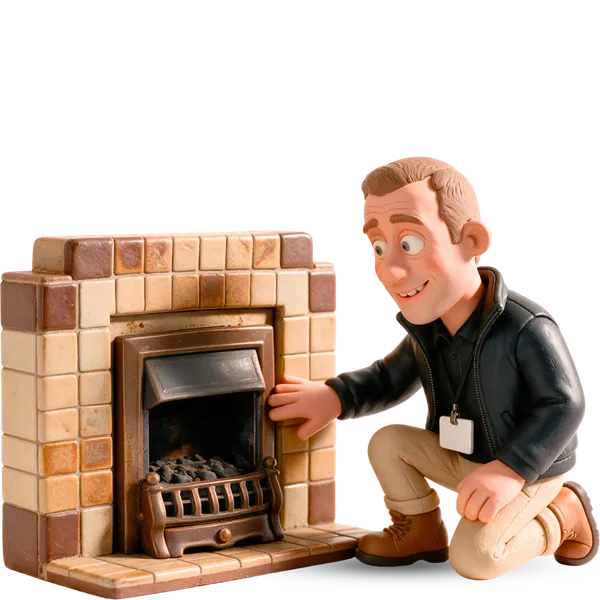
A back boiler is a compact boiler fitted at the back of a fireplace, behind a gas fire, using the chimney to get rid of its waste gases. Baxi introduced the first, the Bermuda, in 1966, and they stayed popular because they took up no extra room. Many are still working in UK homes.
In 2005, building regulations changed to require high efficiency condensing boilers for new installations, and back boilers fell out of use. Baxi notes that older back boilers can be less than 70% efficient, compared with over 90% for a modern boiler, so more of the gas you pay for goes up the chimney.
Are back boilers illegal?
No. It is not against the law to keep a back boiler that is working safely. It should be serviced and safety checked every year by a Gas Safe registered engineer, like any gas boiler.
What has changed is the replacement: you cannot swap an old back boiler for a new one like for like. When it goes, it is replaced with a modern boiler, or for some homes a heat pump. Many people replace theirs when it breaks down, when parts become hard to find, or because they want lower bills and more reliable heating.
Replacing a back boiler with a combi boiler
A combi is often the right replacement where a home has one bathroom and a good mains water supply. As well as replacing the back boiler, it removes the hot water cylinder and any tanks in the loft, which frees the airing cupboard and the loft.
With two or more bathrooms, or a household that uses a lot of hot water at once, a system boiler with a cylinder may suit better. Our guide on combi or system boilers explains the difference.
What the job usually involves
- Taking out the back boiler and, usually, the gas fire in front of it.
- Fitting the new boiler in a new place, often a kitchen, utility room or airing cupboard, where it can have a flue through an outside wall.
- New gas and water pipework from the old position to the new one.
- A new flue for the new boiler, as a modern boiler does not use the chimney.
- Deciding what happens to your hot water: a combi removes the need for a cylinder and loft tanks, while a system or regular boiler keeps a cylinder.
- Making good the fireplace, and deciding about the chimney and whether you want a new fire.
How long does it take to replace a back boiler?
Longer than a straight swap, because the boiler moves and the type of system usually changes too. Ideal puts a job that changes both the boiler type and its position at around three to four days, and moving a boiler of the same type at one to two days. So keeping a cylinder, with only the boiler moving, is usually quicker than changing to a combi.
Your heating and hot water will be off for some of that time, so ask the installer how they will keep you going overnight.
What happens to the fireplace and chimney?
The gas fire usually comes out with the back boiler, as the two are fitted together. The fireplace can then be closed up and made good, or you can have a new fire fitted separately. If you want a new gas fire, it needs its own suitable flue, so plan it with the installer.
A chimney that nothing uses any more can let damp and cold into the house, so it should not just be left. It is usually capped at the top to keep rain out and closed off at the bottom. Ask who will do this, how it suits your chimney, and whether it is in the quote.
Is there a grant to replace a back boiler?
There is no general grant for everyone who has a back boiler. Websites advertising a back boiler grant usually mean the Energy Company Obligation, ECO4, an energy supplier scheme that helps some low income households, depending on their circumstances. GOV.UK says ECO4 ends on 31 December 2026 (checked October 2026).
To see what help you might get, use the energy grants checker on GOV.UK, and be wary of anyone who cold calls offering a free boiler.
Questions to ask before the work starts
Because every back boiler job is different, it needs an installer to look at your home before it can be priced fairly. Through QuoteMy, a QuoteMy Approved installer who covers your area can arrange to see it and give you a quote. You decide.
- Where will the new boiler go, and where will the flue come out?
- Is a combi or a system boiler right for our hot water needs?
- What happens to the gas fire, the fireplace and the chimney? Is making good included?
- Will you check for asbestos? Some older boilers, flue pipes and fireplace boards contain it, and it must be dealt with safely by someone trained to do so.
- How many days will we be without heating and hot water?
Get a back boiler looked at
Every home is different for this job, so an installer needs to see it before they can price it. Answer a few questions about your home and you can ask a QuoteMy Approved installer who covers your area to come and look.
Start with a few questionsOr read how much a new boiler costs.

How we check installers
- Gas Safe. We check each installer's registration number on the Gas Safe Register, and that it belongs to their business.
- Insured. We see their public liability insurance and note when it runs out. If it lapses, they get no new jobs until it is renewed.
- Your details stay with us until you ask for quotes, and then go only to installers matched to you.
Questions
Are back boilers illegal?
No. It is legal to keep and use a back boiler that is working safely. You cannot replace one with a new back boiler, because building regulations since 2005 have required high efficiency condensing boilers for new installations.
Can I replace a back boiler with a combi?
Yes, and it is a common choice in homes with one bathroom and a good mains water supply. The combi goes in a new place, usually with a flue through an outside wall, and the cylinder and loft tanks come out.
Can I keep my gas fire when I replace my back boiler?
The old fire is usually removed with the back boiler, as the two are fitted together. You can have a new fire fitted separately if you want one; ask the installer whether it can be done at the same time.
Where does the new boiler go?
Usually somewhere it can have a short flue through an outside wall, such as the kitchen, a utility room or the airing cupboard. Your installer will suggest the best spot after looking at your home.
How long does it take to replace a back boiler?
Usually longer than a straight swap: often two to four days, depending on whether the type of system changes as well as the boiler moving. Your installer can tell you after looking at your home.
Is there a grant to replace a back boiler?
Not for everyone. Some low income households can get help through government schemes, depending on their circumstances. Check the energy grants service on GOV.UK.
Does a back boiler contain asbestos?
Some older boilers, flue pipes and fireplace boards can. Ask your installer to check before work starts; any asbestos must be dealt with safely by someone trained to do so.