
Updated 12 Oct 2026
The short answer
Usually, yes. A flue is made to work with a particular boiler, and the boiler maker's instructions say which flue must be used, so an old flue rarely suits a new boiler. If the boiler stays in the same place, the new flue normally goes through the same hole.
What a flue does
The flue is the pipe that takes the waste gases from your boiler safely outside. Every gas boiler needs one. Most modern boilers are room sealed: the same flue pipe draws fresh air in for the boiler and sends the waste gases out, so the boiler does not use the air in your room.
Because the flue carries gases that can include carbon monoxide if something goes wrong, it has to be the right one, fitted correctly and checked when the boiler is serviced.

Can you use an existing flue with a new boiler?
Rarely. Flues are made to match the boiler. The size, the seals and the length allowed are set by the boiler maker, and the installer has to follow the maker's instructions. A flue from a different boiler, or an older model of the same make, may not fit or seal properly. Vaillant's advice is that a new boiler will typically need a new flue, even if the old one looks fine.
So when the boiler is replaced, the flue is normally replaced too, and a new flue is usually part of a boiler replacement quote. If a quote leaves it out, ask why.
Types of flue: through the wall or through the roof
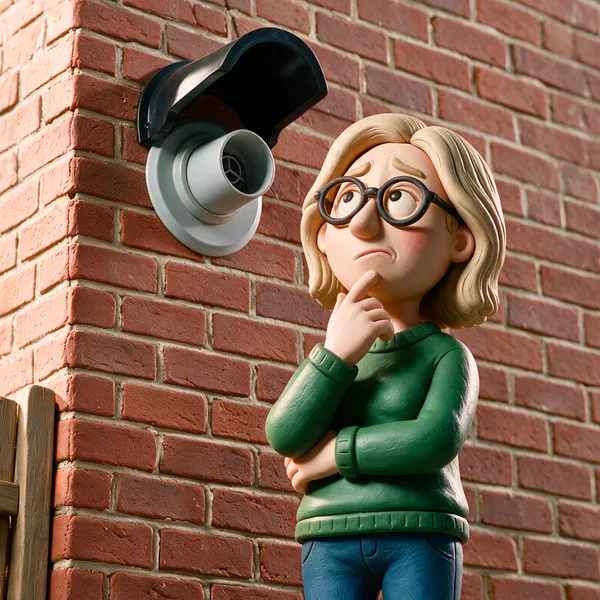
- Horizontal flue: comes straight out through an outside wall, close to the boiler. This is the most common.
- Vertical flue: goes up through the roof. Common where the boiler is in a loft or there is no suitable outside wall.
- Extended flue: a longer run to reach a suitable wall, within the maximum length the boiler maker allows.
Boiler flue regulations: where can a flue go?
There are minimum distances the flue end must keep from things around it, set by British Standards and by the boiler maker. For a typical modern boiler with a fan, Ideal and Viessmann give these as a guide:
- At least 300mm from a window that opens, a door or an air vent, so fumes cannot come back inside.
- At least 75mm below a gutter, drainpipe or soil pipe.
- At least 2.1m above the ground where it opens onto a path or public area.
- At least 300mm above the ground, a flat roof or a balcony.
Flue rules and your neighbour
The flue end also has to keep its distance from your boundary and from your neighbour's windows and doors, and the distances are larger when the flue points straight at a boundary than when it runs alongside one. The exact figures depend on the boiler, so they come from its installation manual.
Even when a flue meets the rules, think about where the vapour goes. If it would drift across a neighbour's window or a shared path, ask the installer about a different position or a plume kit.
Steam from the flue, and plume kits
A modern condensing boiler often puts out a visible cloud of water vapour, called a plume, especially on cold days. It is normal, but it should not blow across a neighbour's window or door or cause a nuisance.
A plume kit is a set of pipes and fittings made by the boiler maker that extends the flue outlet and points the vapour in a better direction, for example higher up or away from a window. It can let a boiler stay in a spot that would otherwise not work.
Flues hidden in ceilings and walls
In some homes, mainly flats and apartments built since 2000, the boiler sits on an inside wall and the flue runs through a ceiling or wall space to the outside. HSE guidance says an engineer must be able to see and check the whole flue, so inspection hatches are needed where they cannot.
If the flue cannot be checked, a Gas Safe registered engineer will treat the boiler as at risk and, with your permission, turn it off. If you live in a flat like this, tell the installer when you ask for a quote, as the flue route will shape the job.
When the flue changes your job
Your installer works this out when they look at your home. If they say the flue has to move, ask them to explain why; a good installer will show you. Our guide price asks where your flue goes out and whether the boiler is moving, and the price it shows includes a new flue.
- Same place, same hole: a routine part of a straight swap.
- Moving the boiler: a new flue route through a wall or roof, which adds work and time.
- Old flue position no longer meets the rules: the installer may need to move the flue or fit a plume kit, even if the boiler stays put.
- A loft or an inside cupboard with no outside wall nearby: a longer or vertical flue may be needed.
See the price for your home
Our guide price takes about 60 seconds. It is free, and you only hear from an installer if you ask for quotes.
Get my guide priceOr read how much a new boiler costs.

How we check installers
- Gas Safe. We check each installer's registration number on the Gas Safe Register, and that it belongs to their business.
- Insured. We see their public liability insurance and note when it runs out. If it lapses, they get no new jobs until it is renewed.
- Your details stay with us until you ask for quotes, and then go only to installers matched to you.
Questions
Can I keep my old flue with a new boiler?
Usually not. The flue needs to be the one the new boiler maker specifies, and an old flue is unlikely to be the right one even if it looks in good condition.
Does a new flue mean a new hole in the wall?
Not usually, if the boiler stays in the same place. The new flue normally goes through the existing opening. A new hole is needed when the boiler moves or the old position no longer meets the rules.
Do all boilers need a flue?
Every gas boiler needs a flue to take its waste gases safely outside. The type and route depend on the boiler and where it is fitted.
How far does a boiler flue need to be from a window?
For a typical modern boiler, at least 300mm from a window that opens, a door or an air vent. The boiler's installation manual gives the exact distance for that model.
Why is there steam coming out of my new boiler's flue?
It is water vapour from a condensing boiler and is normal, especially in cold weather. If it blows onto a window or a neighbour's property, ask your installer about a plume kit.
Who decides where the flue goes?
Your Gas Safe registered installer, following the boiler maker's instructions and the British Standards on flue positions. They should explain the options if there is more than one.
Can a flue go through the roof?
Yes. A vertical flue through the roof is common where the boiler is in a loft or there is no suitable outside wall. The maker sets how long it can be and how it must be fitted.